
The Bananagrams application for iPhone and iPod touch is now available [link to iTunes Store] for $4.99. [Update (03/2010): It is on sale for 99 cents.] It is pretty much an exact port of the Bananagrams game on Facebook and seems to differ only in the interface.
When playing offline, you can play the two one-player games: Solo Cafe (which is timed and involves forming a grid from 21 tiles, with no peeling (though dumping is an option)) and Solitaire (also timed, but requires peeling to finish the 36 or 72 tile bunch).
You can move around to different parts of the board by putting two fingers on the screen and dragging the board. You can also zoom into or away from the board by using the standard iPhone pinching motion.
If you put your finger right on top of a tile to select it, it should pop up a little bit above your finger tip so you can see what letter you are holding. (It leaves behind a white square outline to indicate the actual tile position). You then drag the tile (in pretty much exactly the same way that you use a mouse to drag a tile in the online version of the Bananagrams game) and then remove your finger off the screen to drop the tile where your finger was last touching.
One improvement over the Flash version of Bananagrams is that the iPhone version takes advantage of multi-touch technology by allowing you to select multiple individual tiles at the same time. Put one finger on one tile, a second on another tile, and a third on yet another tile, and you can move them all around independently. I confess that I have not been able to work this into my game yet, but this feature has serious potential.
It also has the ability to select a group of tiles at the same time, which works pretty much like selecting a bunch of file icons in a typical computer operating system graphical interface: 1) Click on the screen somewhere (by pressing your finger). 2) Drag somewhere else to form a rectangle, bounded by the first and last points. 3) Everything inside has been selected and can be (for instance) dragged simultaneously.
I think that there is a bug in the current implementation though, since there is no visual indication that the rectangular selection is taking place; you just have to imagine it. Once you have completed the selection, the selected tiles light up (slightly). Also, the option to rotate the selected tiles (which I described here for the Facebook version) is currently unavailable.
The game works in both landscape and portrait orientations, though I find that I have to start off in the portrait orientation (so there are the initially overturned tiles on the top and my grid on the bottom). After the grid has formed and the peeling has begun, it sometimes feels more natural to rotate the device and switch to the landscape orientation (depending on the shape of the grid).
As with the online version, if you accumulate enough points you can acquire different tile sets and backgrounds (as shown in the example above).
[At this point, I decided to consider the game for a while longer, ultimately returning six months later to finish this review.]
It would be nice if you could keep playing music while playing Bananagrams. I think that if a song is playing when Bananagrams is launched, you should have the option to suppress sound effects and listen to what you want.
When playing offline, the program does not retain your best time. When playing solitaire Bananagrams (which is a pretty good simulation of an actual Bananagrams game if you play the 36-tile version), I like to time myself and try to beat my own best time. Offline statistics-keeping would be a nice feature.
The online functionality works a bit fitfully over a slow Internet connection. The game needs to transfer things like icons (for player avatars) and background images for the board. It can take a while to transmit game results (which is surprising since very little data needs to be sent). Sometimes a dialog box would pop up saying that the game had lost the network connection, and other times I would play all the way through, and then at the end, the game would fail to report the results to the central server. If you have a decent Internet connection, this should not be a problem.
Other bugs: I got into this situation where I could not scroll the board any further to the right, and my letters were right up against this edge. A workaround is to grab all the tiles and move them away from the edge of the board. Also, though I clicked on the "Remember Me" option for logging into my account, the program has forgotten my login information at least once so far. (It is the e-mail address that you need to log in with, not the name that you register under.)
I'm not so crazy about the size of the iPhone screen. You can resize the game so either you can see the whole board simultaneously but the tiles are small (and sometimes hard to select) or so the tiles are big enough to easily select (like, you can see them pop up from around your fingertip) but then you have to pan around to see different parts of the game. The iPad, on the other hand, will probably be the ideal platform for this game once Large Animal Games releases an iPad-optimized version (not that I know that this is under development).
The final verdict: I am probably not in the target market for this game. I love Bananagrams, but I don't play iPhone games very much. Still, I sometimes fire up the app and play a few rounds of the 36-tile version of "Bananagrams Solitaire". It's OK for that. Who this game is really for is Facebook Bananagrams addicts and people with fast Internet connections. If you fit into these two categories, the bugs described above will probably fade from memory as you get caught up in the online Bananagrams slugfests which is where the action really is.
In closing, "Carpe aríenam!" [Seize the banana!].
Tuesday, September 22, 2009


Friday, September 18, 2009
Description of the Pairs in Pears game
Now that the new Pairs in Pears game is available, some new information has surfaced. The tiles come in four designs: solid, outline, lines and dots. The different patterns function like different suits of cards. As there are four suits, each containing a complete alphabet, there are a total of 104 tiles. Just as in a deck of cards, each tile is unique (e.g., the G of solids or the H of dots). This adds an interesting new dimension to play with.

The "Pairs in Pears" game involves making pairs of intersecting words that consist of tiles of all the same pattern (as shown in the picture). Whoever makes a certain number of word pairs first, wins. "Pairpoints" is a variation that includes a more elaborate scoring scheme.
I will post more information about gameplay here, as I find it.
The "Pairs in Pears" game involves making pairs of intersecting words that consist of tiles of all the same pattern (as shown in the picture). Whoever makes a certain number of word pairs first, wins. "Pairpoints" is a variation that includes a more elaborate scoring scheme.
I will post more information about gameplay here, as I find it.
Appletters details revealed!

The online version of the Toy Directory trade magazine reports that Appletters (one of the new games from the makers of Bananagrams, previously mentioned in this post) will come with 110 tiles in a cloth apple and will come with instructions for three separate games:
In Appleletters, for two to six players ages 5 and up, players alternately add tiles to the first or last letter of a word in the middle of the table, creating a continuous "snake" of new words. Apple Turnover, for two to four players ages 7 and up, is similar to Appleletters. However, each player begins with 21 tiles instead of nine, and may actually replace an opponent's word with a longer word. The goal is to be the first player to get rid of tiles. In Applescore, for two to four players ages 7 and up, players build words as long as possible in crossword-like fashion and get bonus points for length, palindromes and going out first.If the spelling above is correct, this means that the overall physical package is called "Appletters", while one of the three games that can be played with the equipment is called "Appleletters". We'll see... All of the games sound interesting. Applescore, in particular, sounds like a sort of Bananagrams-Scrabble hybrid that incorporates the emphasis on long words and scoring of Scrabble while retaining the free-flowing nature, individual grids, and speed of Bananagrams. Adding extra points for palindromes is probably the twist I like the most.
UPDATE: According to the rules of Appleletters, players build a single zigzagging chain of words, like the formation used in dominos:
TOCKThe object of the game is to be the first to use all your letters. If, on a given turn, you cannot add a word to one of the two ends, you must draw three more tiles.
GIANT I E
O A C Y
A BOOK
L
The tiles are about twice as thick as Bananagrams tiles, so they can stand up on their own without need for a rack.
Sunday, September 13, 2009
Word Game Poetry
The idea of rearranging a set of Scrabble tiles to form a poem has been around for a long time. James Ernest of Cheapass Games is credited with popularizing Scrabble poems.
Here is an example of his Scrabble poetry, formed from 98 letters and 2 blanks:
FANATICS
YOU SEE
HAVE TAKEN OUR QUIET BURG
THEY CLIP POWER LINES
JAM _ADIO AND TV
FIRE BLAZING NEXT DOOR
WOE
I MIS_ GERALDO
This is obviously a work of fiction since no one really misses Geraldo.
I found a six stanza poem, in iambic pentameter, with each stanza made up of the 100 tiles of a Scrabble set. The first one reads:
Inspired, I have written what I believe to be the first Bananagrams poem, using all of the 144 Bananagrams letters.
I call it "Box in Woks".
HOWTO:
The process of writing such a thing is not unlike playing a game of Bananagrams: it's easy at first, but then as you approach the end, you realize that you have to rearrange and optimize things more carefully and then iterate. "Iterating, I converge on a solution. Bananas!" Depending on how picky you are, it can take a really long time.
I didn't use this, but a useful guide to this kind of project is the The Art of Long Anagramming page.
If you would like to make your own Bananagrams poem, pangram, or other long anagram, this site has a Flash application that helps you track the number of each letter and the total sentence length. There are also downloadable versions for offline use.
Finally, this anagram generator has an advanced search, allowing the requirement or exclusion of words which is incredibly helpful.
Here is an example of his Scrabble poetry, formed from 98 letters and 2 blanks:
FANATICS
YOU SEE
HAVE TAKEN OUR QUIET BURG
THEY CLIP POWER LINES
JAM _ADIO AND TV
FIRE BLAZING NEXT DOOR
WOE
I MIS_ GERALDO
This is obviously a work of fiction since no one really misses Geraldo.
I found a six stanza poem, in iambic pentameter, with each stanza made up of the 100 tiles of a Scrabble set. The first one reads:
THROUGH SENTIENT, GAUZY FLAME I VIEW LIFE'S DREAD,It is an amazing achievement in Scrabble poetry.
QUIXOTIC, PARTIAL JOKE. WE'RE VAPOUR-BORN,
BY LOGIC AND EMOTION SEEN AS deAD.
Inspired, I have written what I believe to be the first Bananagrams poem, using all of the 144 Bananagrams letters.
I call it "Box in Woks".
I SMUGGLE A JAPANESE PUZZLE BOX IN A WOK.
THE BOX IS AJAR!
QUIVERING IN ANTICIPATION, I QUICKLY WRITE A BANANAGRAMS ODE.
"FEED LEFTOVER WORDS
TO HER VULTURE.
DECODE THE MYSTERY FOOD."
HOWTO:
The process of writing such a thing is not unlike playing a game of Bananagrams: it's easy at first, but then as you approach the end, you realize that you have to rearrange and optimize things more carefully and then iterate. "Iterating, I converge on a solution. Bananas!" Depending on how picky you are, it can take a really long time.
I didn't use this, but a useful guide to this kind of project is the The Art of Long Anagramming page.
If you would like to make your own Bananagrams poem, pangram, or other long anagram, this site has a Flash application that helps you track the number of each letter and the total sentence length. There are also downloadable versions for offline use.
Finally, this anagram generator has an advanced search, allowing the requirement or exclusion of words which is incredibly helpful.
Saturday, September 12, 2009
Hypothetical huge word grid
I heard about Monopoly City Streets, the online Monopoly game which uses a world map as the game board and streets all over the world for properties. It made me wonder: What would a Bananagrams grid that incorporated all the words in the dictionary look like?
If we use the Scrabble Tournament Word List (TWL), we get
101 + 1015 + 4030 + 8938 + 15788 + 24029 + 29766 + 29150 + 22326 + 16165 + 11417 + 7750 + 5059 + 3157 = 178,691 words. (This list neglects words longer than 15 letters, since they can't fit on a Scrabble board.) If we assume that every word intersects with two other words, this will require about 1,227,094 letters.
Each Bananagrams tile is a square, 1.9 cm (0.75 inches) on a side, so with an average grid density of 0.63 (my rough estimate), a Bananagrams grid with all the allowed words would be a square, about 1400 letters on a side, measuring 27 meters (87 feet) each way. That would cover an area a bit larger than one-and-a-half full-sized basketball courts.
How long would it take to assemble? If you suppose that a solution has been computer-generated and turned into instructions, someone who could place 10 words per minute, working 12 hours per day, would require 25 days to put it together.
If we use the Scrabble Tournament Word List (TWL), we get
101 + 1015 + 4030 + 8938 + 15788 + 24029 + 29766 + 29150 + 22326 + 16165 + 11417 + 7750 + 5059 + 3157 = 178,691 words. (This list neglects words longer than 15 letters, since they can't fit on a Scrabble board.) If we assume that every word intersects with two other words, this will require about 1,227,094 letters.
Each Bananagrams tile is a square, 1.9 cm (0.75 inches) on a side, so with an average grid density of 0.63 (my rough estimate), a Bananagrams grid with all the allowed words would be a square, about 1400 letters on a side, measuring 27 meters (87 feet) each way. That would cover an area a bit larger than one-and-a-half full-sized basketball courts.
How long would it take to assemble? If you suppose that a solution has been computer-generated and turned into instructions, someone who could place 10 words per minute, working 12 hours per day, would require 25 days to put it together.
Monday, September 7, 2009
Bananagrams Jargon
Most of the terms used when playing Bananagrams ("split", "bunch", "peel", and "bananas!") are all banana-themed. "Dump" is an obvious outlier - it doesn't quite fit. Some alternatives I have heard suggested are: "slip", "bad banana", "rotten banana", "bad spot". "Slip" has the one-syllable advantage, but sounds a bit too much like "split" for my taste. Maybe an exclmation like "Yuck!" would work. The "bad/overripe" theme seems appropriate, but of course "Rotten Banana" is reserved in the official instructions for someone who claims to have won but turns out to have used one or more bogus words. The word for the little gray bit at the end of the banana might work, assuming it has a name...
How about those stringy things on bananas? They are called "phloem bundles". They distribute nutrients throughout the banana. They are technically edible, but no one likes them, and people often throw them out. The analogy is perfect, and it's a short word (pronounced /FLOW em/). (Incidentally, peeling the banana from the other end (as monkeys do) is said to reduce the phloem problem, as the strings tend to stick to the peel.) The next time I elect to dump a tile, I'm going to say "Phloem!" and see how the other players react.
One final possibility (as a house rule) is simply not saying anything at all. People are generally too engrossed in the game to care.
How about those stringy things on bananas? They are called "phloem bundles". They distribute nutrients throughout the banana. They are technically edible, but no one likes them, and people often throw them out. The analogy is perfect, and it's a short word (pronounced /FLOW em/). (Incidentally, peeling the banana from the other end (as monkeys do) is said to reduce the phloem problem, as the strings tend to stick to the peel.) The next time I elect to dump a tile, I'm going to say "Phloem!" and see how the other players react.
One final possibility (as a house rule) is simply not saying anything at all. People are generally too engrossed in the game to care.
Saturday, August 29, 2009
History of anagrams: Anagrams as encryption
Galileo was a professor in Padua, Italy, studying physics and mathematics, when he heard about the sudden development of telescopes in Holland. Guessing at how they worked, he created his own in 1609 and began promoting it for the monitoring of ships by merchants. 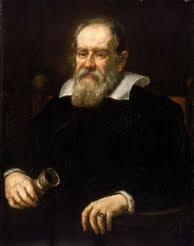
By the fall, he began using it for astronomical observations. He designed a series of successively better telescopes, giving him the ability to discern smaller details of the night sky than anyone before him. This opened up a gold rush of scientific exploration. Galileo was able to make astronomical discoveries very fast, but such discoveries could sometimes take months or years to verify, which left him with a dilemma: If he announced his discovery immediately, he could eventually turn out to have made a mistake; if he waited, one of his competitors might find the same thing and get the credit. Galileo's solution (and possibly one already in use by other scientists) was to write a short description of his findings, rearrange the letters, and distribute the coded version. In that way, he could reveal his conclusions at any time in the future.
In 1610, he sent letters to his fellow scientists, containing the following string of letters: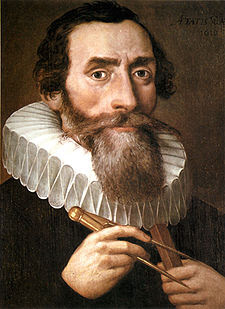 anagrammed very hard and came up with this solution:
In December of 1610, Galileo made an even bigger discovery which he transmitted as a true anagram:
In the 1670s, Robert Hooke was studying the physics of springs. He found that when you stretch a spring, the force that it pulls back with is proportional to the distance that you pull it. This came to be known as Hooke's Law. Hooke encrypted this in a popular way among scientists of the time: He simply alphabetized the letters and got "ceiiinosssttuv". The unscrambled version is "Ut tensio sic vis." which he revealed a few years later to mean "As the extension, so the force.".
Hooke held on to another discovery much longer. In 1671, he announced to the Royal Society of London (a group of scientists, dedicated to advancing scientific knowledge) that he had figured out what the optimal shape for the arch of a bridge was. Four years later, he published the encoded form of his conclusion:
 The unanagrammed form was not revealed until after he died in 1703(!). It read "As hangs a flexible cable, so inverted, stand the touching pieces of an arch." which means that if you hang a chain between two poles, you get a special curve called a catenary, and if you turn it upside down, this is the best shape for supporting a bridge.
I am guessing that the practice of anagramming conclusions in this way gradually disappeared as more formal publication methods were developed (the earliest probably being the journals published by the Royal Society of London starting in 1665).
In a way, this kind of encryption was not so different from the seeking of metaphysical truth through anagramming (as covered in a previous post), except that the scientists were deliberately putting the distilled form of the truth on the other end of the anagram and letting people search for it.
For more background on Galileo and his anagrams, you can read http://www.mathpages.com/home/kmath151.htm.
For more about Hooke's law and his caternary findings, see: http://www.lindahall.org/events_exhib/exhibit/exhibits/civil/design.shtml.
And for a fictionalized account of 17th century science and the development of the Royal Society (among other things), try Neal Stephenson's Baroque Cycle.

By the fall, he began using it for astronomical observations. He designed a series of successively better telescopes, giving him the ability to discern smaller details of the night sky than anyone before him. This opened up a gold rush of scientific exploration. Galileo was able to make astronomical discoveries very fast, but such discoveries could sometimes take months or years to verify, which left him with a dilemma: If he announced his discovery immediately, he could eventually turn out to have made a mistake; if he waited, one of his competitors might find the same thing and get the credit. Galileo's solution (and possibly one already in use by other scientists) was to write a short description of his findings, rearrange the letters, and distribute the coded version. In that way, he could reveal his conclusions at any time in the future.
In 1610, he sent letters to his fellow scientists, containing the following string of letters:
smaismrmilmepoetaleumibunenugttauirasFellow astronomer, Johannes Kepler
 anagrammed very hard and came up with this solution:
 Salve umbistineum geminatum Martia proles.which translates to "Be greeted, double knob, offspring of Mars", and which Kepler interpreted to mean that Galileo had discovered that Mars has two moons, something that Kepler had predicted. But it turned out that Kepler's anagram was not the one that Galileo had had in mind. Allegedy the Holy Roman Emperor became interested in Galilelo's finding, and so Galileo finally revealed the actual original sentence to be
Altissimum planetam tergeminum observavi.which translates roughly to "I have observed the most distant of planets (Saturn) to have a triple form" (where U and V are treated as interchangeable in Latin). Galileo thought that he had observed two moons orbiting Saturn. He was wrong, as Huygens showed in 1656 that what Galileo had seen was actually a ring around Saturn. Huygens wrote an anagram about this, too.
In December of 1610, Galileo made an even bigger discovery which he transmitted as a true anagram:
Haec immatura a me iam frustra leguntur oy.which, translated, means roughly "This was already tried by me in vain prematurely". Kepler pleaded with him to reveal what he had found, and so in January, Galileo replied with the unanagrammed sentence:
Cynthiae figuras aemulatur Mater Amorum.Translation: "The Mother of Loves [Venus] imitates the figures of Cynthia [the Moon]." by which Galileo meant that Venus cycles through phases, just like the Moon. He had observed that Venus is not a light source - it simply reflects light from the Sun. And from the way it waxed and waned like the Moon, he could tell that Venus was orbiting the Sun. At a time when many held that everything revolved around the Earth, this was an amazing result.
In the 1670s, Robert Hooke was studying the physics of springs. He found that when you stretch a spring, the force that it pulls back with is proportional to the distance that you pull it. This came to be known as Hooke's Law. Hooke encrypted this in a popular way among scientists of the time: He simply alphabetized the letters and got "ceiiinosssttuv". The unscrambled version is "Ut tensio sic vis." which he revealed a few years later to mean "As the extension, so the force.".
Hooke held on to another discovery much longer. In 1671, he announced to the Royal Society of London (a group of scientists, dedicated to advancing scientific knowledge) that he had figured out what the optimal shape for the arch of a bridge was. Four years later, he published the encoded form of his conclusion:
 The unanagrammed form was not revealed until after he died in 1703(!). It read "As hangs a flexible cable, so inverted, stand the touching pieces of an arch." which means that if you hang a chain between two poles, you get a special curve called a catenary, and if you turn it upside down, this is the best shape for supporting a bridge.
I am guessing that the practice of anagramming conclusions in this way gradually disappeared as more formal publication methods were developed (the earliest probably being the journals published by the Royal Society of London starting in 1665).
In a way, this kind of encryption was not so different from the seeking of metaphysical truth through anagramming (as covered in a previous post), except that the scientists were deliberately putting the distilled form of the truth on the other end of the anagram and letting people search for it.
For more background on Galileo and his anagrams, you can read http://www.mathpages.com/home/kmath151.htm.
For more about Hooke's law and his caternary findings, see: http://www.lindahall.org/events_exhib/exhibit/exhibits/civil/design.shtml.
And for a fictionalized account of 17th century science and the development of the Royal Society (among other things), try Neal Stephenson's Baroque Cycle.
Subscribe to:
Posts (Atom)
![If I stay there can be no party. I must be out there in the night, staying vigilant. Wherever a party needs to be saved, I'm there. Wherever there are words that need anagramming, I'm there. But sometimes I'm not because I'm out there in the night staying vigilant, watching, lurking, running, jumping, hurdling, sleeping. No, I can't sleep. You sleep. I'm awake. I don't sleep. I don't blink. Am I a bird? No. I'm a banana. I am Bananagrammer. Or am I? Yes, I am Bananagrammer. [applies chapstick]](https://blogger.googleusercontent.com/img/b/R29vZ2xl/AVvXsEgI5Yf53B1clpF3cLb11zYrIhaMn1Grv8uDvAhy_9vwjTU-CZCcX5MYmPwX-TnSagBaWwvJpIWeVsOP3q4r6k_HYnuRcVAOou4fwCkkVU7Or2NXmaWfZS6CjtkPnaeIdq3-wvdOC2DJb-Ra/s400/BGR-plot-medium.png)

